The official connection
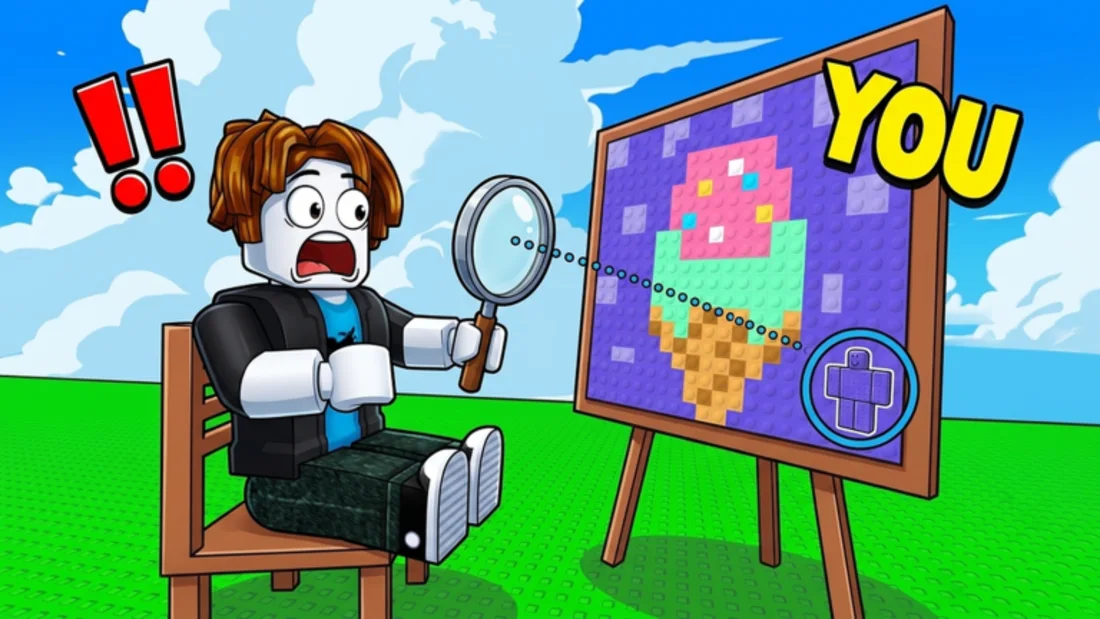
The Hide In Pixels description ends with a direct note: the game is inspired by Mecca Chameleon. That is unusually clear for a Roblox experience, and it gives players a useful reference point. If you have played Mecca Chameleon, the basic idea of painting yourself to match a scene will feel familiar.
Inspiration is not the same as a copy. Hide In Pixels presents the idea as a 1v1 duel with a best-of-three round structure, a win streak, and a set of troll items. The pacing and the decision space are shaped by those choices, not just by the painting mechanic.
This page compares the two games at the level of the loop and the player experience. It does not claim to know the internal design of either game, and it does not repeat unverified claims about modes or features that are not in the official descriptions.
What the two games share
Both games ask the player to blend into a visual scene. Both reward color matching, silhouette control, and patience. Both make the hiding spot a decision, not just a location. If you are good at reading a painting and removing your outline, that skill transfers.
Both also punish movement. A player who keeps adjusting after the hiding phase ends is easier to spot in either game. The core discipline of freezing is shared, even if the surrounding rules differ.
Where Hide In Pixels differs
Hide In Pixels frames the round as a head-to-head duel. One player paints and hides; the other hunts. The first player to win two rounds takes the match. That structure creates a short feedback loop: you see what the seeker checked, and you adjust in the next round.
The game also adds a layer of disruption. Jumpscares, flash bangs, and screen shakes give the hiding player a way to interrupt the seeker's attention. Those tools change the timing of a round, especially in the last few seconds.
The painting rotation and the troll items make Hide In Pixels more of a party game than a pure observation game. The best player is not always the one with the cleanest blend; it is the one who can protect a good blend when the seeker gets close.
| Aspect | Hide In Pixels | Mecca Chameleon |
|---|
| Core idea | Paint yourself to match a pixel painting | Blend into a scene |
| Round shape | 1v1 duel, first to two round wins | Varies by mode; check the official game |
| Disruption | Jumpscares, flash bangs, screen shakes | Set differs by game version |
| Best starting skill | Boundary control and a fast three-color base | Color matching and patience |
Which one should you play?
If you want a short, repeatable duel with a clear winner and a visible streak, Hide In Pixels is the more direct choice. The best-of-three structure gives you a chance to adjust, and the troll items add a social layer that a pure hiding game does not have.
If you want the original inspiration or a different set of modes, play Mecca Chameleon and check its current official description. The two games can coexist; playing one does not make the other obsolete.
The practical answer for a new player is to start with the game your friends are playing. Both games reward the same core skill, so the time you spend learning to blend transfers.
What to learn from each game
From Mecca Chameleon, the transferable lesson is patience with color and silhouette. The original inspiration is a reminder that hiding is a visual problem before it is a movement problem. Players who learn to read a scene and remove their outline will find the same skill useful in Hide In Pixels.
From Hide In Pixels, the transferable lesson is round adjustment. The best-of-three structure gives you a second chance to fix one variable. That is a different skill from pure hiding: you have to remember what the seeker checked and change the right thing. A player who treats every round as a fresh start misses the advantage the format provides.
If you play both games, keep the skills separate in your notes. The hiding craft transfers; the round rules and item timings do not.
A note on search results
Search results for Hide In Pixels often include Mecca Chameleon because the two names appear together in the official description. Some videos compare them directly; others use one name as a shorthand for the genre. If a result is about a different game, check the title and the place ID before following the advice.
The same caution applies to the name Hide in Paintings, which is often used for Hide In Pixels but can also describe other painting-based hide games. The Hide in Paintings page explains the naming confusion.
What transfers between the games
The three-color base transfers. The outline-first order transfers. The habit of choosing a spot before painting transfers. The freeze discipline transfers. Those four skills cover most of the hiding side of both games.
The parts that do not transfer are the specific round rules, the item timings, and the map knowledge. Those are game-specific and should be learned separately. A guide for one game can teach you the general idea, but it cannot give you the other game's exact timings.