Are Hide In Pixels private servers free?
The official description lists free private servers. If the game page asks for payment, check that you are on the correct Hide In Pixels experience.
Practice
A private server is the fastest way to learn the paint phase without a stranger watching every mistake.
Updated
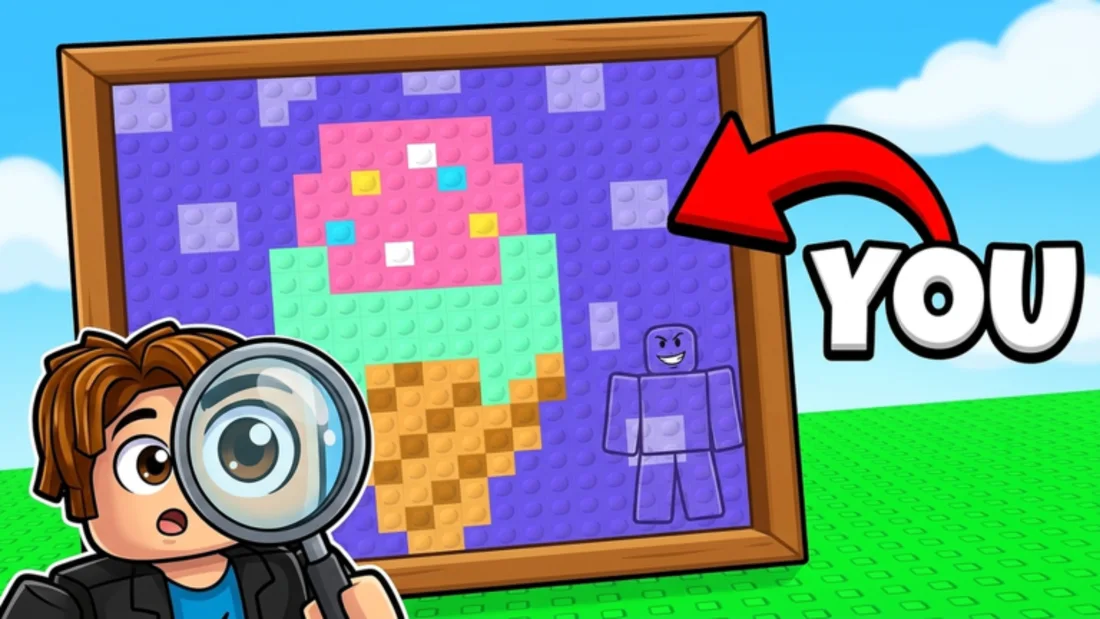
Hide In Pixels is a duel, which means every public round has an audience of one who is actively trying to find you. That is good for testing, but it is poor for learning. A private server removes the audience and lets you repeat the paint phase without the pressure of being watched.
The official description lists free private servers, so you do not need a game pass or a paid server to practice. The value is not secrecy; it is repetition. You can run the same painting, the same spot, and the same routine until the process is automatic.
Private servers are also useful for playing with a friend who is learning. You can explain the painting order, pause between rounds, and switch roles without a random player interrupting the session.
Open the official Hide In Pixels page on Roblox and look for the private server option on the game page. The description says the private servers are free, so the flow should not ask for Robux. If your account does not show the option, check that you are on the correct game page and not a different experience with a similar name.
Once the server is open, invite the friend you want to practice with. The round structure is the same as a public match: paint, freeze, and hunt. The difference is that you can agree on a constraint before the round starts, such as no troll items or no repainting after the freeze.
If the private server option is not available on your platform, use a low-population public server at an off-peak hour. It is not the same as a private server, but it gives you more room to practice than a full server.
Drill one: both players use only three colors. This forces you to find the dominant shades instead of chasing details. Drill two: paint the outline before the interior. This is the single most useful habit in the game, and it is easier to practice when no one is hunting you.
Drill three: choose the spot before the first block. This removes the last-second scramble and teaches you to paint for a specific background. Drill four: no repainting after the freeze. This builds the discipline that wins close rounds.
Drill five: one player uses a troll item at a fixed moment, and the other player practices recovering. The goal is not to win the drill; it is to make the recovery automatic so that a real item does not reset your entire search.
New players try to learn everything at once: the palette, the painting, the spot, the freeze, the items. That is too many variables for one session. Teach the round structure first, then the paint order, then the spot. Leave troll items for the third or fourth session.
A useful teaching format is one constraint per round. Round one: finish any blend. Round two: finish a three-color blend. Round three: pick the spot first. Round four: freeze without moving. The constraints are simple enough to remember and specific enough to produce feedback.
Let the new player be the seeker as well. Seeing the painting from the hunter's side makes the outline problem obvious. A player who has spent one round looking for a clean silhouette will understand why the outline matters in the next round.
A private server is the best place to learn what each item feels like. Use one item per round and watch how the other player reacts. The goal is to learn the timing, not to win. If the item lands while the seeker is far away, you have learned that early use does nothing. If it lands while they are checking a row, you have learned where the disruption is strongest.
Test the items in the same order every time: screen shake, flash bang, jumpscare. The shake is the subtlest, the flash is the most disruptive to a route, and the jumpscare is the most direct. Learning them in order makes the differences easier to feel.
Do not test all three items in one round. The reactions overlap, and you will not know which item caused the change. One item, one round, one observation.
Go back when you can finish a three-color blend, break the outline, and freeze without rushing in three private rounds in a row. That is enough consistency to survive a public round. Waiting for perfection is a trap; public matches teach different skills, especially reading a seeker's route.
Start with one public match and treat it as a test of the routine, not a test of your worth. If the routine holds, play another. If it falls apart, return to the private server for one focused round and fix the step that failed.
The private server is a workshop, not a replacement for the game. The goal is to make the routine strong enough that a public match feels like a variation, not a new problem.
FAQ
The official description lists free private servers. If the game page asks for payment, check that you are on the correct Hide In Pixels experience.
Yes. The core duel is one against one, so a private server with two players is the cleanest way to practice the round structure.
The experience supports up to 20 players in a server. A private server can be used for a two-player practice session or a larger group, depending on how you set it up.