How do I beat a seeker who checks every spot carefully?
Give them a blend that survives a close look. A careful seeker will still miss a character whose outline disappears into the painting, because there is no shape to investigate.
Round strategy
Winning is less about a secret spot and more about a repeatable round plan you can adjust after the first duel.
Updated
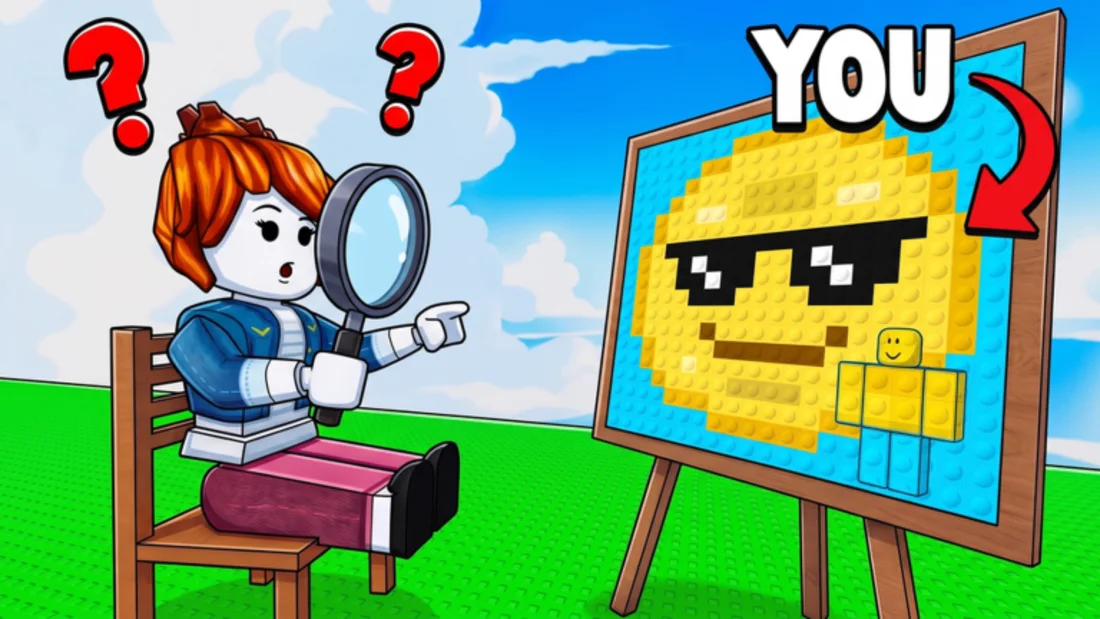
A round is decided before the seeker takes a single step. If your paint is finished and your spot matches, the seek phase is a matter of patience. If your paint is unfinished or your spot is wrong, the seek phase is a series of panicked corrections. The players who look lucky in the hunt are usually the ones who finished early and had nothing left to fix.
Treat the paint phase as a deadline, not a creative session. Give yourself a hard stop: when the timer reaches the last quarter, stop painting and settle. The extra blocks you add in the final seconds rarely help, and the movement they require often gives away a spot that was already good enough.
The same deadline applies to spot selection. Pick the spot in the first third of the paint phase. Everything after that is execution. A player who is still choosing a spot in the last ten seconds is a player who will lose to their own indecision.
The first round is information, even if you lose it. Watch where the seeker looks first. Most players check the frame, the largest prop, and the area around the painting's main subject before they slow down. If the seeker finds you quickly, they are probably checking edges and silhouettes rather than colors. If they walk past you twice, they are reading the painting's shapes and need a more committed blend.
Keep a mental note of the route, not just the result. A seeker who starts on the left side of the painting and sweeps right will repeat that pattern in the next round unless you give them a reason to change. Put your next hiding spot on the side they check last, and make the first side look busy enough to hold their attention.
Do not over-adjust after one round. If you lost because your outline was obvious, fix the outline. If you lost because the seeker happened to walk straight to you, changing everything can make the next blend worse. Adjust one variable at a time.
A match is first to two round wins, so the second round is where most matches are decided. If you won round one, keep the same routine but change the hiding area. The seeker now knows what your blend looks like, and a repeat spot is the first place they will check. If you lost round one, simplify. A cleaner outline in a new area is a better adjustment than a more detailed version of the same idea.
At 1-1, the third round is usually won by the player who makes fewer changes. Both players have seen each other's habits. The player who panics and tries a completely new painting style often ends up with an unfinished character. The player who keeps the routine and moves to a less obvious spot usually wins.
If the game gives you the same painting in a later round, do not repeat the exact same spot. Use the knowledge from the first attempt: you know which part of the painting the seeker checked first, and you know which part absorbed your outline best. Move to the second-best area and apply the same technique.
The best hiding spot is not the most hidden one. It is the one that still looks correct when the seeker stops and stares. That usually means a spot with three qualities: a background that continues your body colors, a nearby shape that breaks your outline, and a reason for the seeker to look somewhere else.
Avoid spots that rely on occlusion. Standing behind a prop works until the seeker walks around it. Standing inside the painting's pattern works at every angle because the camouflage is part of the scene. The frame and the large props are the first places experienced seekers check, so treat them as decoys rather than hiding places.
A strong spot also gives you an escape route in case the seeker gets close. You do not need to run, but you should know which direction you would move if the round allowed it. A spot with no exit is a spot that depends entirely on the seeker missing you, which is not a plan.
Use a troll item when the seeker is committed to a search pattern, not when they are still walking toward your area. A flash bang or screen shake at the moment the seeker starts checking your row can break their concentration and buy you a second. Using it while they are far away wastes the item and tells them you are nearby.
The jumpscare is the most direct disruption. Save it for the moment the seeker is close enough to be startled but not close enough to see your position clearly. If they are already looking at you, the jumpscare will not undo the recognition. If they are one step away from your spot, it can make them flinch and move on.
The safest rule is one item per round, used late. Players who spam items early run out of disruption when the seeker actually reaches them. The troll item guide breaks down each item and the moments it is worth using.
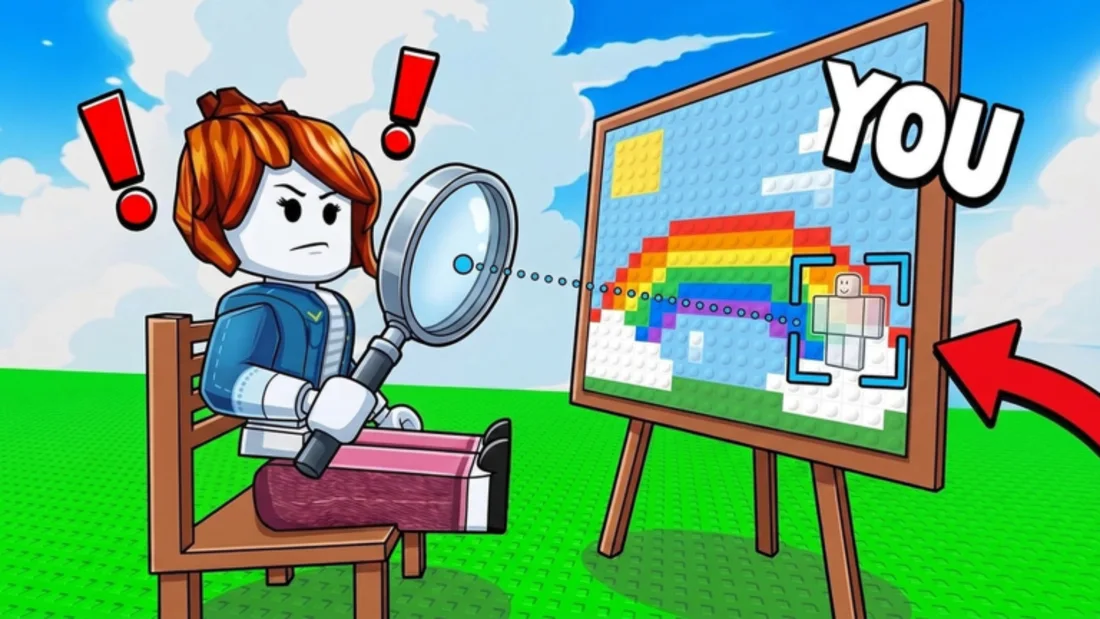
In the final round, the temptation is to play safer than usual. That often means hiding in a corner, which is exactly where a seeker checks first. Safer does not mean more hidden. It means more predictable for you and less predictable for the seeker.
Use the routine that got you to 1-1: finish the base colors, break the outline, pick a spot early, freeze. The only change is the location. Move to the area the seeker has checked least, even if it feels more exposed. An exposed spot with a good blend beats a hidden spot with a bad one.
If you are the seeker in the final round, slow down. The player who is winning usually wants the round to end quickly; the player who is losing wants a mistake. Walk the painting in a consistent order, check the edges before the center, and do not let a troll item rush you past a spot you have not inspected.
The first is over-painting. A player finishes a good blend, then adds detail in the last ten seconds and creates a new edge. The second is moving after the freeze. A player who is well hidden adjusts their camera or position and gives the seeker a reason to turn around. The third is using a troll item too early, which wastes the one disruption that could have saved the round.
The fourth is copying the painting's subject instead of the background. The seeker is already looking at the subject; a second copy of it is a beacon. The fifth is changing spots after the seeker has already seen the area. A late move is more visible than a committed average spot.
Most of these mistakes come from the same source: the belief that the round needs more work than it does. Once the blend is good and the spot is set, the best move is usually to stop.
FAQ
Give them a blend that survives a close look. A careful seeker will still miss a character whose outline disappears into the painting, because there is no shape to investigate.
Change the area, not the process. Repeating the exact spot invites a repeat check; repeating the routine keeps your paint quality consistent.
Late, when the seeker is already committed to checking your area. Early use wastes the disruption before it can affect a decision.